The Last Buildings Like This Are Already Gone
Investing
Investing
There is a particular kind of building that only exists in neighborhoods that survived their own decline.
Not the ones that were demolished and replaced. Not the ones that were stripped and subdivided into something unrecognizable. The ones that made it through. Held together by a stubborn owner, or a quiet block, or sheer structural luck, and came out the other side still wearing all of their original bones.
Jacksonville has a neighborhood full of buildings like that. Most people who live here know its name. Not nearly enough of them understand what is quietly happening there right now.
Springfield Is Not Up and Coming. It Has Already Come.
The phrase "up and coming" gets attached to Historic Springfield so often that it has almost lost its meaning. People have been calling it up and coming for twenty years.
What they miss is that the coming part is largely done. More specifically, I would say that is has come just about as far as it can without some additional help from downtown and the Main business corridor that is Main Street.
Springfield is Jacksonville's oldest residential neighborhood — developed between 1890 and 1920, listed on the National Register of Historic Places, and anchored by Klutho Park, one of the oldest public parks in the state of Florida. The Victorian-era streetscape is intact in a way that simply does not exist in many American cities of Jacksonville's size.
The revitalization that began quietly in the early 2000s has been building momentum for two decades. Young professionals discovered it first. Then came the restaurants and the coffee shops and the renovated bungalows. Then came the investors who noticed that per-square-foot pricing in Springfield was still a fraction of what comparable historic product was commanding in Riverside and Avondale just a few miles south. The neighborhood was comprised of interesting, quirky “urban pioneers” in those early days.
And now, back to what I mentioned earlier about downtown, right now, in 2026 — the larger infrastructure is catching up to what the neighborhood already was.
Pearl Square is bringing a new Publix and a full mixed-use development to Springfield's western edge. The Emerald Trail corridor is expanding the connected multi-use network through the neighborhood and into the downtown core. Riverfront Plaza opened last year on the St. Johns, transforming the downtown waterfront in a way that makes the walk from Springfield to the river feel like a genuine urban amenity rather than a hike through a surface parking lot. The Sports Complex redevelopment is underway. The Shipyards project is moving with the Four Seasons coming soon.
None of this is speculation. It is already permitted, already funded, already under construction, or already open.
What this means for Springfield specifically is that the neighborhood's competitive advantage — authentic historic character, walkability, proximity to downtown, supply protection through historic designation — is about to be amplified by a wave of public and private investment that will make it dramatically more visible to a dramatically larger pool of buyers, tenants, and visitors.
The window in which you could acquire something truly significant in this neighborhood at a price that reflects its current condition rather than its imminent destination is not wide. It is, in fact, narrowing in real time.
What a Neighborhood Needs to Cross the Threshold
Not every historic neighborhood makes it. The ones that do tend to share a few common traits — and Springfield is checking every box.
They need anchoring amenities. Parks, trail networks, walkable retail, and cultural destinations that give residents a reason to be outside and a daily life that does not require a car for every errand. Springfield has Klutho Park at its doorstep and the Emerald Trail threading through it. Pearl Square will add the grocery and dining infrastructure that turns a neighborhood from interesting to livable for a much broader demographic.
They need supply protection. Historic designation creates a structural barrier to the kind of dense new construction that erodes neighborhood character in less protected areas. You cannot tear down a contributing structure in Springfield and build a five-story apartment complex in its place. The supply of authentic, large-format historic residential product is not going to grow. It can only be restored, repositioned, or held.
They need proximity to economic drivers. Baptist Health, Mayo Clinic, UF Health, and the legal and corporate districts of downtown Jacksonville generate a steady, year-round stream of traveling professionals, relocating executives, and visiting specialists who need quality furnished housing and are willing to pay for it. Springfield sits minutes from all of it.
When those three conditions are present simultaneously in a neighborhood with genuine architectural bones, something almost always happens to values. The question is never really whether. It is when, and whether you are positioned before or after.
One Building, Telling the Whole Story
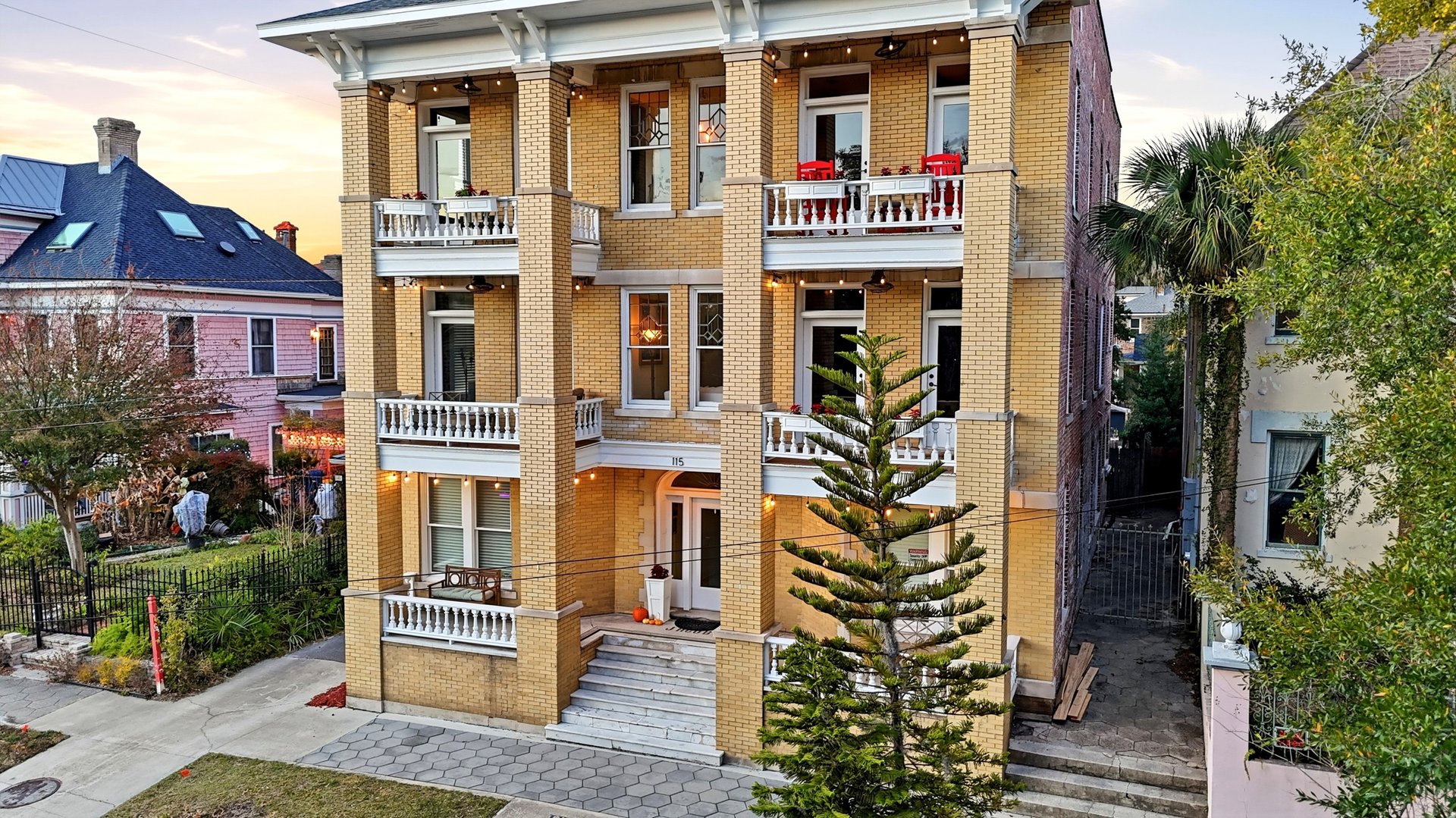
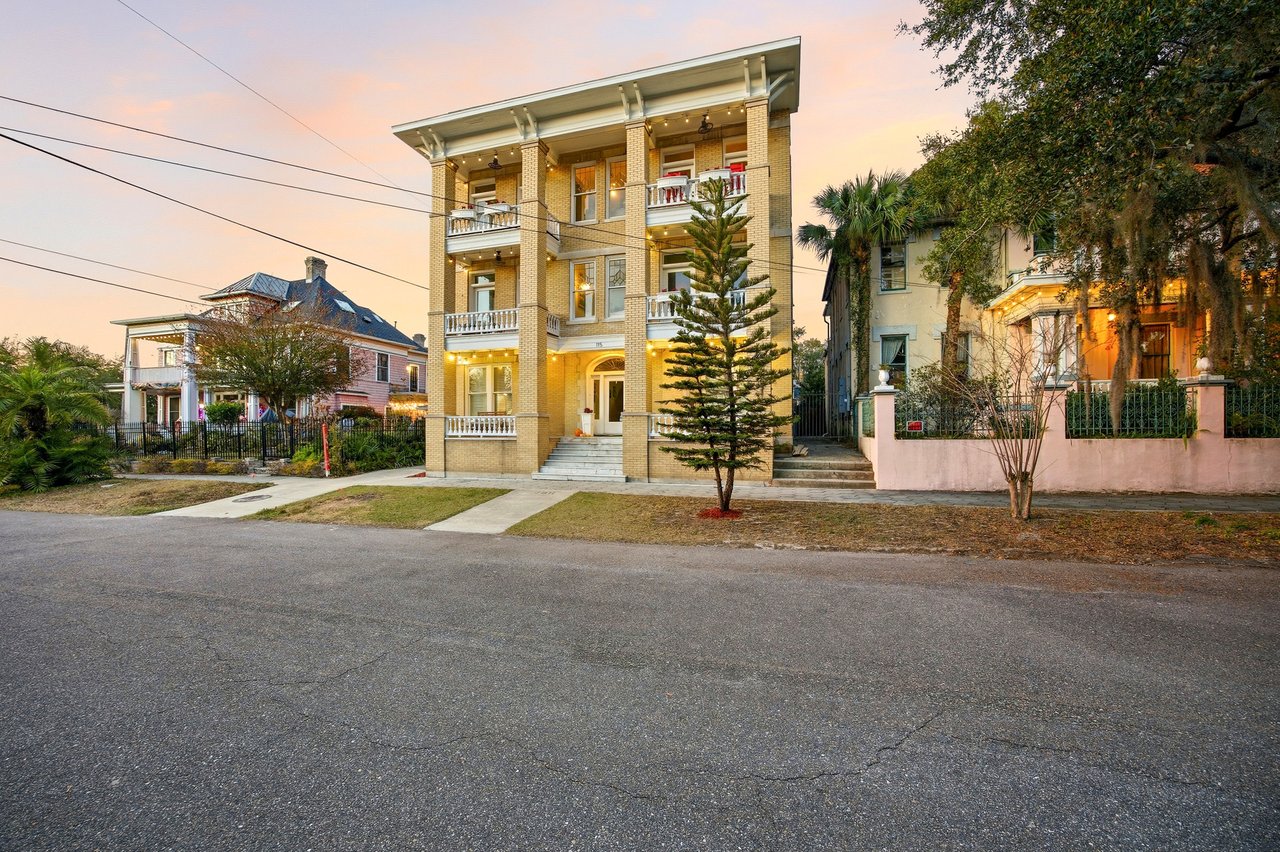
There is a five-unit building on West 2nd Street in Springfield that I have been representing for the past several months, and I want to tell you about it — not primarily as a sales pitch, but because it illustrates everything I have been describing more concretely than any market analysis I could write.
It was built in 1906. Brick construction, three stories, four oversized 1BR/1.5BA executive flats and a true 2,288 square foot penthouse occupying the entire top floor with panoramic views of Klutho Park and the Jacksonville skyline. Every unit has in-unit laundry — a detail that sounds minor until you understand how meaningfully it expands the qualified tenant pool in this submarket. The rear yard has a covered tiki bar, an infrared sauna, a hot tub, a fire pit, and a brick courtyard that feels more like a boutique hotel amenity package than a residential backyard.
Klutho Park is two minutes from the front door on foot. The Emerald Trail runs through the corridor. Pearl Square and the incoming Publix are an eight-minute walk.
What makes this building remarkable is not any single feature. It is the combination — the scale, the authenticity, the location, the amenity platform, and the income potential — assembled in a building that simply cannot be replicated. Historic designation protects the neighborhood from the kind of supply that would compete with it. There is no version of this building that gets built new today in Springfield. It exists because it survived.
The pro forma at stabilized executive lease rates supports a projected gross income of $192,000 annually and a cap rate of approximately 8% at the offering price of $1,750,000. The current operation is owner-occupied and partially furnished, which means there is meaningful gap between what the building is generating today and what it supports at full stabilization — and that gap represents genuine upside for an incoming owner willing to operate it intentionally.
The ideal buyer for this property is not someone looking for an easy, fully-stabilized income stream. It is an owner-operator who wants to live with distinction and let the building work beneath them, or an experienced furnished housing operator who understands the Jacksonville corporate relocation and healthcare market and knows how to fill rooms like this. There are not many assets that speak to both of those profiles simultaneously. This one does.
A Word on Investor Psychology and Why Timing Matters
I want to be honest about something, because I think it is actually part of what makes this opportunity interesting.
Sophisticated real estate investors do not typically pay today's aspirational price for tomorrow's anticipated growth. They price current income, current risk, and current market conditions — and they expect a discount that compensates them for the uncertainty of what comes next. An investor who believes Springfield will appreciate 20% over the next two years does not want to pay that forward today. They want to capture it.
That is not a weakness in the thesis. It is the thesis. The window in which you can acquire an irreplaceable historic asset in a neighborhood on the verge of a major visibility inflection — before the public infrastructure is fully in place, before the comp set catches up, before the story is obvious to everyone — is precisely the window worth paying attention to. The time to buy into a neighborhood like Springfield is not after the Publix opens and the trail is finished and the comps reflect the new reality. It is now, while the market is still pricing the current condition rather than the imminent one.
The building on West 2nd Street has been on the market for several months. That is not unusual for an asset of this specificity — the right buyer for a property like this is a narrow and particular person, and finding them takes time. But the market context surrounding it is shifting. The infrastructure is arriving. The comp set is moving. The window is not closing tomorrow, but it is not standing still either.
What I Have Learned Representing This Property
I have been selling real estate in Historic Springfield and the surrounding historic neighborhoods of Jacksonville for years, and I will tell you plainly: this building is one of the most extraordinary assets I have ever had the privilege of representing.
Not because it is perfect — no property is. But because it is genuinely irreplaceable in a way that very few buildings are. The 1906 brick. The penthouse with its view corridor. The scale of the flats. The location on a quiet block of one of the most authentically preserved historic streetscapes in the Southeast. These are not features that can be manufactured or approximated. They either exist or they do not.
The right buyer is out there. When they find this building, they will understand it immediately. My job until that moment is to make sure the story is told as clearly and as widely as possible.
If any part of what I have written here resonates with you — as an investor, as someone considering a move to Jacksonville, or simply as someone who believes that buildings like this deserve to be cherished rather than overlooked — I would love to hear from you.
115 West 2nd Street is actively listed at $1,750,000. For the full offering memorandum, showing requests, or a conversation about the Springfield market, contact Thomas Love at Belle Époque Realty Services LLC — 904-382-7695 or [email protected].
Belle Époque Realty Services LLC specializes in historic residential and commercial properties in Springfield, Riverside, Avondale, and Murray Hill. BelleEpoqueRealty.com

Pricing
Why pricing, not marketing, decides whether a listing sells
What Investors Get Wrong About Historic Home Renovation
Investing
A story about Historic Springfield, what makes a neighborhood turn, and one 1906 brick building that has been waiting patiently for the right person to find it.

Here’s how to move from plan to action.
Belle Epoque Realty offers the very best service possible in terms of communication with clients and overall results. To empower real estate customers with education and choice while elevating the respectability of the profession with high-quality, consistent, and innovative service delivery.