He was twelve, maybe thirteen, walking through Springfield for the first time with his parents on an afternoon that would quietly determine a good portion of his professional life, although he wouldn't know that for years.
The neighborhood was not what it is today. Block after block of pre-war homes sat in various states of abandonment, their millwork softening, their porches giving way, their windows gone dark. Anyone with eyes saw blight. He saw something else entirely. Beneath the decay and stately oak trees, there was texture, proportion, a quality of craftsmanship that spoke of a time when buildings were made to outlast the people who built them. He was immediately and completely captivated.
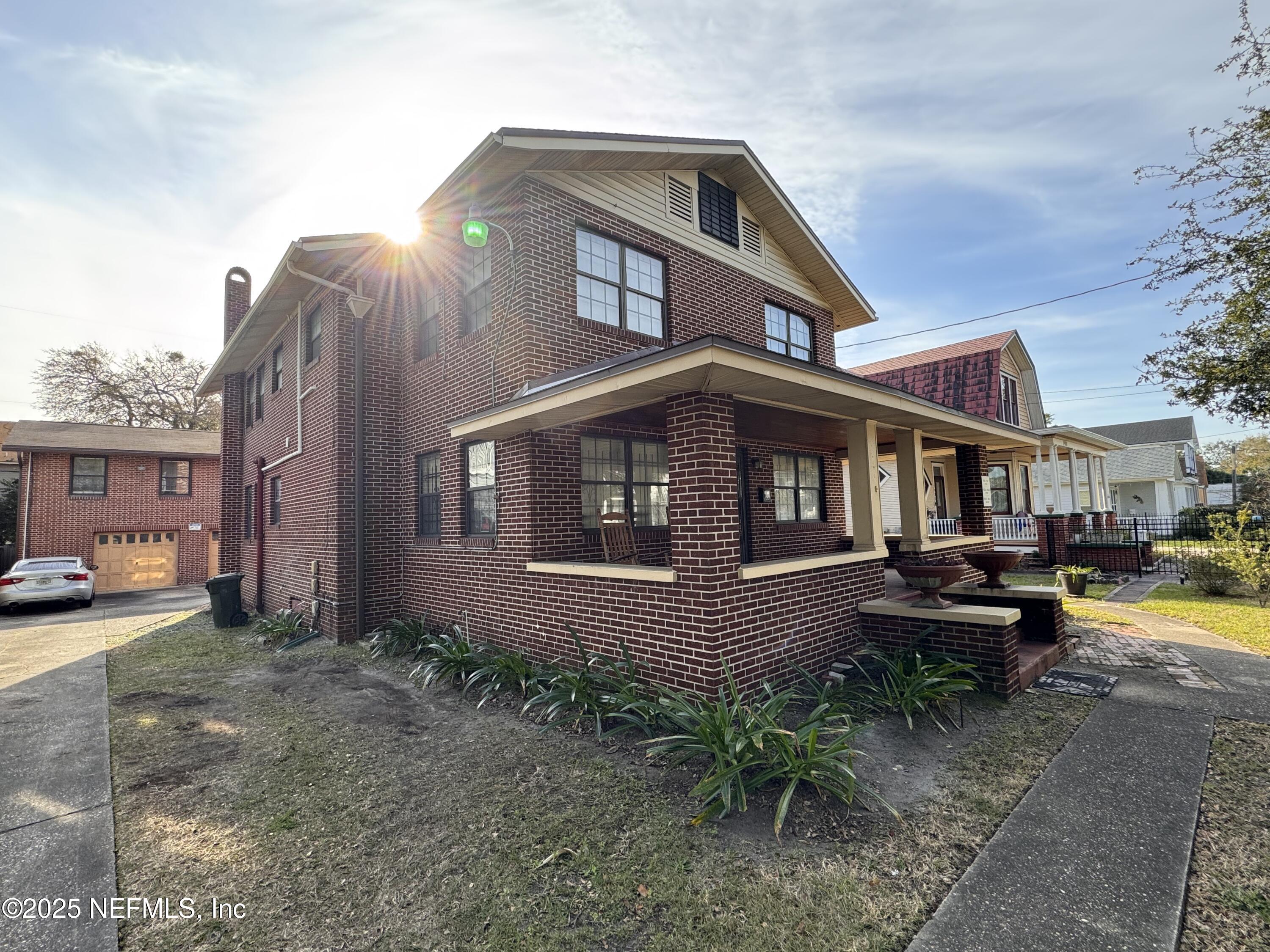
There was one house in particular, on Silver Street, that rose high above the road as if presiding over it. A large, hulking, magnificent ruin. The front porch had collapsed to its joists. He and his parents scrambled across them anyway and sat there in the wreckage, inside something that had once been great and gone quiet, and he marveled at the scale of it. At what it must have been. At what it might be again.
That house has since been fully restored.
Years passed. He left Florida. He lived in Colorado for a time, carrying that afternoon in Springfield the way you carry certain memories. Not actively, but somewhere close. When he eventually came back to Jacksonville to visit family, he found himself driving through the old neighborhood almost without deciding to. What he saw stopped him.
Springfield was waking up. One house at a time, the restoration was beginning. People with vision were buying in, believing in, doing the work. He recognized immediately that he wanted to be part of it. Not as an observer, but as someone with a role in the revival. He obtained his real estate license in 2005 and has been working in Jacksonville's historic districts ever since, watching neighborhoods become, slowly and then all at once, what he always believed they could be. In 2025 he was appointed by the Mayor of Jacksonville to serve as a Commissioner on the Jacksonville Historic Preservation Commission, one of seven individuals charged with protecting the city's architectural legacy.
He named his brokerage Belle Époque — a phrase worth explaining, because it is not immediately obvious and is occasionally difficult to pronounce. Bell ā-poke. It refers to a specific period in European history, roughly 1880 to 1914, defined by optimism, artistic flourishing, and a remarkable faith in craftsmanship and beauty. It was an era that produced some of the finest architecture the Western world has ever seen. Buildings that were made not merely to function, but to elevate the lives of the people inside them.
The name was not chosen casually. It describes exactly what he believes historic preservation is: an act of optimism. A decision that beauty matters, that the past has something to teach us, that some things are worth keeping.
He plays guitar and cello. He writes songs. His wife is an artist. His son is paying attention to all of it.
He grew up on an island where the architecture told old stories and the relationship to beauty was not considered frivolous. He carries that sensibility into every property he represents. A conviction that the right home for the right person is not a transaction. It is a kind of homecoming.
He works with people who understand why historic homes matter. Not just aesthetically, but philosophically. People who feel the weight of a well-made room and recognize it as something worth protecting.
If that is you, he would be glad to show you what he sees.
Call or text Thomas directly: (904) 382-7695